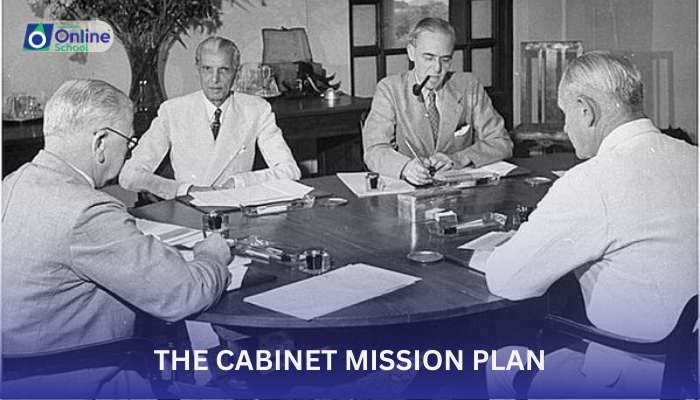
Background/Arrival of the Delegation
In fulfilment of the promise made during 1945-46 elections, the British Government sent three senior members of the British Cabinet, in March 1946, as a last attempt to preserve unity of the Indian federation. The delegation flew from London and arrived in Delhi on March 24, 1946. Representing the Congress Maulana Abdul-Kalam Azad and Gandhiji took a plea for the preservation of the Indian Union and introduction of federal form of government. The Quaid-e-Azam tried to impress upon the members that Pakistan was the only possible solution of the Indian problem.
Failure of Dialogue with Indian Leadership
Difference of opinion between the two major political parties was substantial and sharp. The Mission tried to make an effort to bring about the parties to a conciliatory formula acceptable for both.Leaders of the two major parties were invited at Simla from May 5, to 12, 1946 to discuss matters but no result could be achieved.
RECOMMENDATIONS
After the declaration of its failure to bring about the parties to a conciliatory formula, the Mission published its own proposals on May 16, 1946 with the hope that if these proposals were implemented, rights of the Muslims and other minorities, will be fully safeguarded within the framework of an Indian Union. Summed up here are the major proposals of the Cabined Mission Plan:
i. Indian Union: India shall be a Union comprising the British Indian and the Princely states. Union government shall control foreign affairs, communications
and taxation.
ii. Grouping Scheme: Provinces shall be divided into three groups formed under following formula: Group A; six Hindu majority provinces; Group B; three Muslim majority provinces; Group C; two Muslim majority provinces.
iii. Internal Independence of the provincial Groups: Members of the Constituent Assembly shall be divided into three groups and shall frame constitutions for their respective groups. After the date of first elections held under the Constitution, each provincial legislature shall be given a chance to decide whether it wanted to remain a part of the group or quit it (after ten years).
iv. Establishment of the Interim Government: The Plan further envisaged that an interim government shall be formed at the center till the formation of the constitution and its implementation. In this government, all important portfolios, including the Ministry of Defense, shall be held by the Indians.
REACTION
The Muslim League Council decided to approve the Plan. The Council resented that the Plan did not clearly provide for the demand for Pakistan but it saw a ray of hope in the "grouping scheme", and confirmed that the party would join the Constituent Assembly with the hope that it would be able to achieve its objectives through constitutional means.
Gandhiji interpreted the Plan as “an appeal and an advice". He said that the Constituent Assembly as a sovereign body shall have the power to amend the Plan. This interpretation made congress approval meaningless, so the Muslim league also withdrew its approval.
